Top 3D Camera Lenses for Stunning Depth Capture
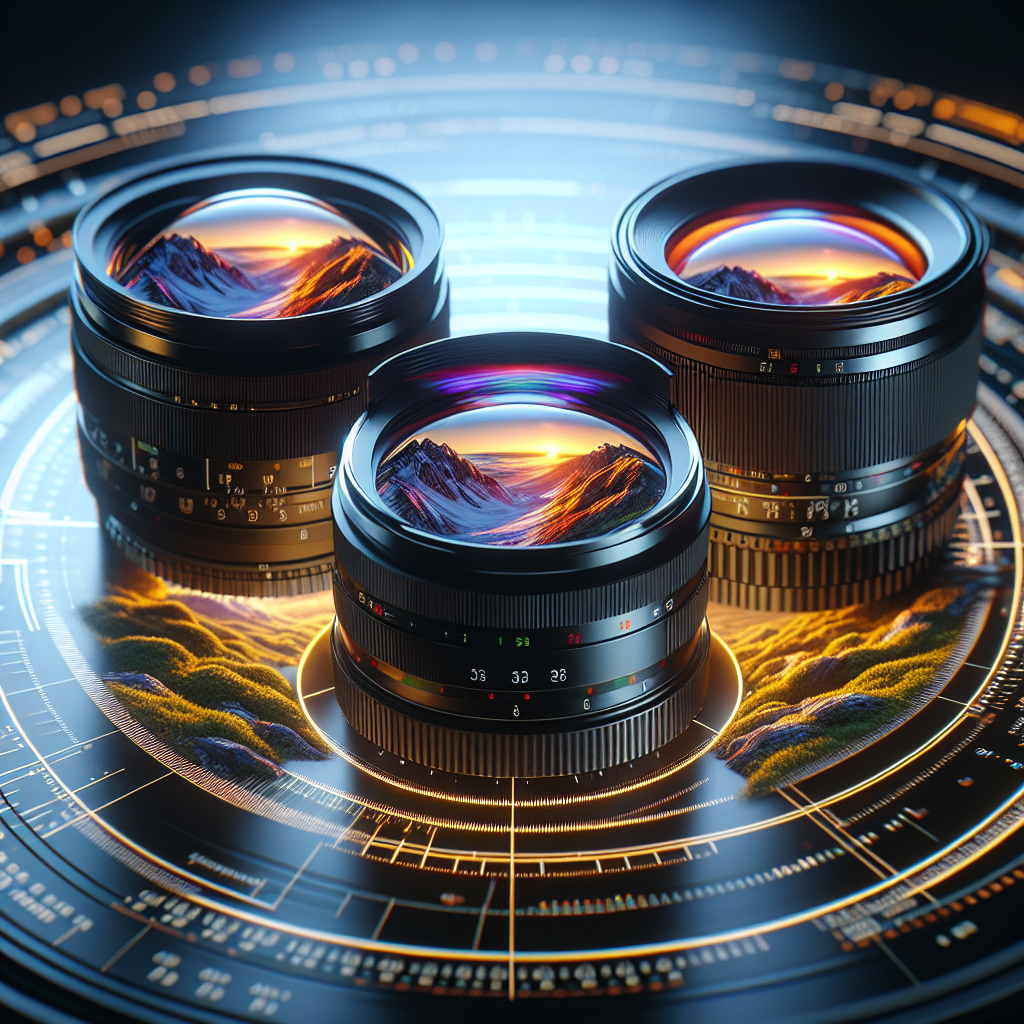
In the realm of photography and videography, 3D technology has opened new dimensions for creators, enabling them to capture images with stunning depth and realism. The effectiveness of a 3D camera largely depends on the lens, which plays a pivotal role in determining the quality of depth capture. In this article, we will delve into the top 3D camera lenses that have set the benchmark for delivering exceptional depth and clarity. These lenses not only enhance the 3D experience but also provide creative flexibility for photographers and filmmakers.
The Importance of Lenses in 3D Photography
Before exploring specific lenses, it’s crucial to understand why lenses are so vital in 3D photography. A 3D lens functions by mimicking the human visual system, which perceives depth through the slight difference in the two images seen by our left and right eyes. In 3D cameras, lenses work in pairs to capture two slightly offset images that, when combined, create the illusion of depth. Therefore, the quality, focal length, and aperture of the lenses directly affect the 3D image’s depth and overall quality.
Top 3D Camera Lenses for Stunning Depth Capture
1. Canon RF 5.2mm F2.8 L Dual Fisheye Lens
Canon has long been a powerhouse in the world of photography, and their RF 5.2mm F2.8 L Dual Fisheye Lens is a testament to their innovation in the 3D space. This lens is part of Canon’s EOS VR System, designed specifically for capturing high-quality 3D and VR content.
Key Features:
– **Dual Fisheye Design:** The unique dual fisheye design allows for 180-degree stereoscopic capture. This feature is crucial for VR applications, providing an immersive experience that closely simulates human vision.
– **Wide Aperture:** With an aperture of F2.8, this lens performs exceptionally well in low-light conditions, which is often a challenge in 3D photography.
– **High-Quality Optics:** Canon’s L-series lenses are renowned for their superior optical performance, and this lens is no exception. It delivers sharp, high-contrast images with minimal distortion.
Applications: Ideal for professional VR production, immersive virtual tours, and creative 3D projects that require a wide field of view and excellent depth capture.
2. Panasonic Lumix G 3D 12.5mm f/12 Lens
The Panasonic Lumix G 3D 12.5mm f/12 Lens is a compact and innovative lens designed for micro four-thirds cameras. It’s an excellent choice for photographers who wish to explore the world of 3D without investing in bulky equipment.
Key Features:
– **Compact Design:** This lens is remarkably lightweight and compact, making it highly portable and user-friendly for on-the-go 3D photography.
– **Fixed Aperture:** With a fixed aperture of f/12, this lens ensures consistent depth of field and clarity across different lighting conditions.
– **Dual Lens System:** It incorporates two lenses in a single unit, which captures two images simultaneously to create a stereoscopic effect.
Applications: Perfect for hobbyists and enthusiasts looking to capture 3D images in everyday settings, from family gatherings to scenic landscapes.
3. Nikon 1 Nikkor 3D 6.7-13mm f/3.5-5.6 VR Lens
Nikon’s foray into the 3D domain is marked by the 1 Nikkor 3D 6.7-13mm f/3.5-5.6 VR Lens, which combines versatility with advanced 3D capture capabilities. This lens is part of Nikon’s mirrorless system, offering a blend of portability and performance.
Key Features:
– **Versatile Focal Range:** The 6.7-13mm focal range provides flexibility in framing, from wide-angle shots to more focused compositions, enhancing creative possibilities in 3D photography.
– **Vibration Reduction (VR):** This feature minimizes camera shake, crucial for maintaining sharpness in 3D images, especially in low-light conditions or when shooting handheld.
– **High-Quality Construction:** Built with Nikon’s renowned optics, this lens delivers excellent image quality with vibrant color reproduction and minimal aberrations.
Applications: Suitable for both amateur and professional photographers who require a versatile lens for capturing dynamic 3D content across various scenarios.
Factors to Consider When Choosing a 3D Lens
Choosing the right 3D lens involves considering several factors that affect both the shooting experience and the final output. Here are some critical considerations:
Focal Length and Field of View
The focal length of a lens determines its field of view and how much of the scene will be captured in each frame. For 3D photography, lenses with a wider field of view are often preferred as they can capture more of the scene and provide a more immersive experience.
Aperture
The lens aperture controls the amount of light entering the camera and affects depth of field. A wider aperture (lower f-number) allows more light and creates a shallow depth of field, which can be used creatively to isolate subjects in 3D space. However, in 3D photography, maintaining a consistent depth of field across the scene is often more desirable, making lenses with moderate apertures more effective.
<h4/Image Quality
Lens quality is paramount in achieving sharp, high-contrast images with minimal distortion. High-quality lenses are constructed with advanced optics and coatings to reduce chromatic aberrations and flare, which can degrade 3D images.
Compatibility
Ensure the lens you choose is compatible with your camera system. Some lenses are designed specifically for certain mounts or sensor sizes, and using the wrong lens can lead to suboptimal performance or even damage to the equipment.
Conclusion
The evolution of 3D camera technology has brought forth a range of lenses that cater to different needs, from professional VR content creation to casual 3D photography. The Canon RF 5.2mm F2.8 L Dual Fisheye Lens, Panasonic Lumix G 3D 12.5mm f/12 Lens, and Nikon 1 Nikkor 3D 6.7-13mm f/3.5-5.6 VR Lens are among the top choices for capturing stunning depth and detail in 3D imagery. When selecting a 3D lens, consider factors such as focal length, aperture, image quality, and compatibility to ensure you achieve the best results in your creative endeavors. With the right lens, the possibilities in 3D photography and videography are truly limitless, offering a new way to experience and share the world through a three-dimensional perspective.








Post Comment