Unleashing Clarity: High-Resolution 3D Camera Revolution
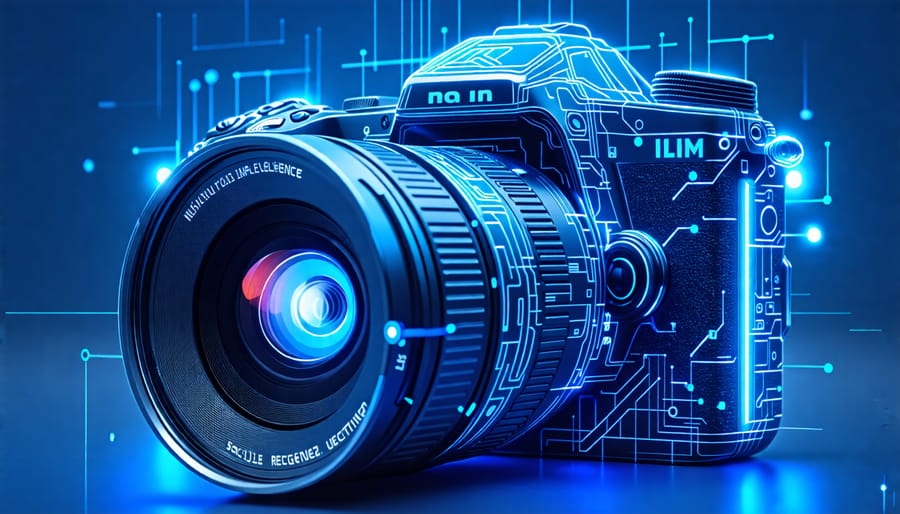
the 3D Camera Revolution
In recent years, the world has witnessed a transformative leap in imaging technology, with high-resolution 3D cameras at the forefront of this revolution. These cameras are not just enhancing visual experiences but are reshaping industries ranging from entertainment to manufacturing. The surge in demand for precision and detail has propelled the development of 3D cameras that offer unparalleled clarity and depth perception. In this article, we delve into the factors driving the high-resolution 3D camera revolution and explore its implications across various sectors.
The Evolution of 3D Imaging Technology
The journey of 3D imaging technology is marked by significant milestones. Early 3D cameras struggled with low resolution and cumbersome designs. However, with advancements in sensor technology, computational imaging, and data processing, modern 3D cameras have become more compact, accurate, and efficient. The shift from analog to digital, and now to high-definition 3D imaging, has opened new frontiers for capturing reality with stunning fidelity.
High-Resolution: The Heart of Modern 3D Cameras
At the core of the current revolution is the push for higher resolution. High-resolution 3D cameras capture intricate details, providing clarity that was previously unattainable. This level of detail is made possible by advancements in sensor technology, which allows for more pixels to be packed into a smaller area. The result is sharper images with greater depth, improved color accuracy, and enhanced dynamic range.
Sensor Advancements
Modern 3D cameras employ advanced sensors such as CMOS (Complementary Metal-Oxide-Semiconductor) and CCD (Charge-Coupled Device). These sensors are engineered to capture light more efficiently, reducing noise and increasing sensitivity. Innovations such as backside illumination (BSI) and stacked sensors further enhance performance, allowing for faster readout speeds and better low-light capabilities.
Computational Imaging
The integration of computational imaging techniques plays a crucial role in achieving high resolution. These cameras use sophisticated algorithms to process multiple frames, enhancing image quality and depth perception. Techniques like depth mapping, stereoscopic imaging, and time-of-flight (ToF) technology enable the creation of highly detailed 3D models with accurate spatial information.
Applications Across Industries
The impact of high-resolution 3D cameras extends far beyond photography. Various industries are leveraging this technology to enhance their operations and deliver superior products and services.
Entertainment and Media
In the realm of entertainment, high-resolution 3D cameras are revolutionizing how stories are told. Filmmakers and game developers use these cameras to create immersive experiences that captivate audiences. From blockbuster movies to virtual reality (VR) games, the ability to render realistic and detailed environments enhances user engagement and storytelling.
Healthcare and Medical Imaging
In healthcare, high-resolution 3D imaging is transforming diagnostics and treatment planning. Surgeons use these cameras to create accurate 3D models of organs, aiding in preoperative planning and improving surgical outcomes. Additionally, dental professionals and radiologists benefit from precise imaging that enhances their ability to diagnose conditions accurately.
Manufacturing and Quality Control
Manufacturers are increasingly adopting high-resolution 3D cameras for quality control and inspection. These cameras provide detailed scans of components, enabling early detection of defects and ensuring product consistency. In industries such as aerospace and automotive, where precision is paramount, 3D imaging facilitates the production of high-quality products.
Architecture and Construction
In architecture and construction, 3D cameras are used to create accurate models of buildings and sites. This technology allows architects to visualize designs in detail and make informed decisions during the planning phase. Construction teams benefit from precise measurements and site assessments, reducing errors and improving project efficiency.
Challenges and Future Prospects
While the high-resolution 3D camera revolution offers numerous benefits, it also presents challenges. The complexity of data processing and the demand for large storage capacities are significant hurdles. Moreover, the cost of high-resolution 3D cameras can be prohibitive for some applications.
Data Processing and Storage
The vast amount of data generated by high-resolution 3D cameras requires robust processing capabilities. Efficient algorithms and powerful hardware are essential to handle the data and render it in real-time. Additionally, the need for substantial storage solutions is a challenge, as high-resolution images and videos occupy considerable space.
Cost Considerations
High-resolution 3D cameras are often more expensive than their lower-resolution counterparts. This cost can be a barrier to adoption, particularly for small businesses or individual users. However, as technology advances and economies of scale come into play, the prices are expected to decrease, making these cameras more accessible.
Future Developments
Looking ahead, the future of high-resolution 3D cameras is promising. Continued advancements in artificial intelligence (AI) and machine learning will further enhance image processing capabilities, making 3D imaging more efficient and versatile. The integration of 5G technology will facilitate faster data transmission, enabling seamless real-time applications.
Conclusion: Embracing the Clarity
The high-resolution 3D camera revolution is unleashing a new era of clarity and precision in imaging. As these cameras become more widespread, their impact will be felt across a diverse range of industries, from entertainment to healthcare. Despite the challenges, the benefits of high-resolution 3D imaging are undeniable, offering unprecedented opportunities for innovation and growth. By embracing this technology, industries and consumers alike can look forward to a future where visual experiences are richer, more immersive, and more detailed than ever before.









Post Comment