Top Innovations in 3D Imaging Equipment 2026
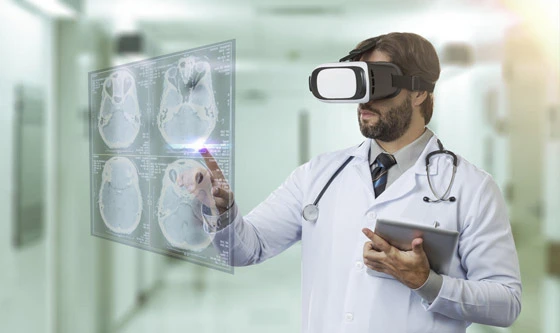
The world of 3D imaging has been rapidly evolving, with 2026 marking a significant year for breakthrough innovations in 3D cameras and equipment. These advancements have not only improved the quality and precision of 3D imaging but have also expanded their applications across various industries. From healthcare to entertainment, the latest technologies are reshaping how we capture and interpret three-dimensional spaces. This article delves into the top innovations in 3D imaging equipment for 2026, highlighting key developments and their implications for the future.
Enhanced Depth Sensing Technology
One of the most significant advancements in 3D imaging equipment this year is the enhancement of depth sensing technology. Leading manufacturers have integrated advanced sensors that provide higher accuracy and resolution. These sensors utilize a combination of infrared (IR), time-of-flight (ToF), and structured light technologies to capture intricate details with unprecedented precision.
The integration of AI algorithms has further refined depth sensing, allowing for real-time processing and analysis. This technology is particularly beneficial in fields such as autonomous vehicles, where precise depth information is crucial for navigation and obstacle detection.
Revolutionary Lidar Systems
Lidar (Light Detection and Ranging) systems have seen remarkable improvements in 2026. New lidar systems are now more compact, energy-efficient, and capable of delivering higher resolution scans. These systems use laser beams to measure distances, generating detailed 3D maps of environments.
In the field of archaeology, lidar technology is being used to uncover hidden structures beneath dense forest canopies. Similarly, in urban planning, lidar is facilitating the creation of accurate 3D models of cities for better infrastructure development and management.
Breakthroughs in Photogrammetry
Photogrammetry, the process of creating 3D models from 2D images, has experienced significant advancements. Cutting-edge software now offers faster processing times and enhanced accuracy, making photogrammetry more accessible to a broader range of industries.
These improvements are particularly impactful in the gaming and film industries, where photorealistic 3D models are essential. By harnessing the power of cloud computing, photogrammetry software can now handle larger datasets, resulting in more detailed and realistic 3D environments.
Advancements in Volumetric Capture
Volumetric capture technology has seen impressive progress in 2026, offering new possibilities for immersive experiences. This technology captures objects or scenes in 3D, allowing them to be viewed from any angle, creating truly interactive content.
The entertainment industry has been a significant beneficiary, using volumetric capture to create immersive virtual reality (VR) and augmented reality (AR) experiences. Additionally, this technology is being explored for remote training and education, providing users with an interactive learning environment.
Emergence of Real-time 3D Reconstruction
Real-time 3D reconstruction has emerged as a game-changer in 3D imaging equipment. By leveraging powerful processors and sophisticated algorithms, this technology allows for the immediate creation of 3D models from captured data.
Industries such as construction and architecture are utilizing real-time 3D reconstruction to visualize projects in real-time, facilitating better decision-making and collaboration. Additionally, in the healthcare sector, this technology is being used for real-time surgical planning and monitoring.
Integration of Augmented Reality in 3D Imaging
The integration of augmented reality (AR) in 3D imaging equipment has opened up new dimensions for user interaction. AR overlays digital information onto the physical world, enhancing the user’s perception and interaction with their environment.
In the retail industry, AR is being used to create virtual fitting rooms, allowing customers to try on clothes virtually. Similarly, in the medical field, AR is being leveraged to provide surgeons with enhanced visualization during complex procedures, improving accuracy and outcomes.
Improved Portability and User Accessibility
The trend towards miniaturization and portability has not bypassed 3D imaging equipment. In 2026, there is a clear focus on making devices more user-friendly and accessible. Portable 3D scanners have become more compact and lightweight, without compromising on performance.
This shift is particularly beneficial for industries that require on-site data collection, such as construction, archaeology, and forensics. The ability to quickly and easily deploy 3D scanning equipment in the field enhances efficiency and productivity.
Conclusion
The innovations in 3D imaging equipment in 2026 are testament to the relentless pursuit of excellence and technological advancement. From enhanced depth sensing to real-time 3D reconstruction, these developments are not only revolutionizing existing industries but also paving the way for new applications and opportunities.
As these technologies continue to evolve, we can expect even more groundbreaking achievements in the realm of 3D imaging. The fusion of artificial intelligence, augmented reality, and other cutting-edge technologies promises a future where 3D imaging is not only more accessible but also more transformative than ever before.









Post Comment